I like a campsite that looks ready: chairs angled properly, useful things within reach, and nothing left to fuss with when we want to enjoy it. The trick is knowing when “ready” becomes one more thing sitting in the way.
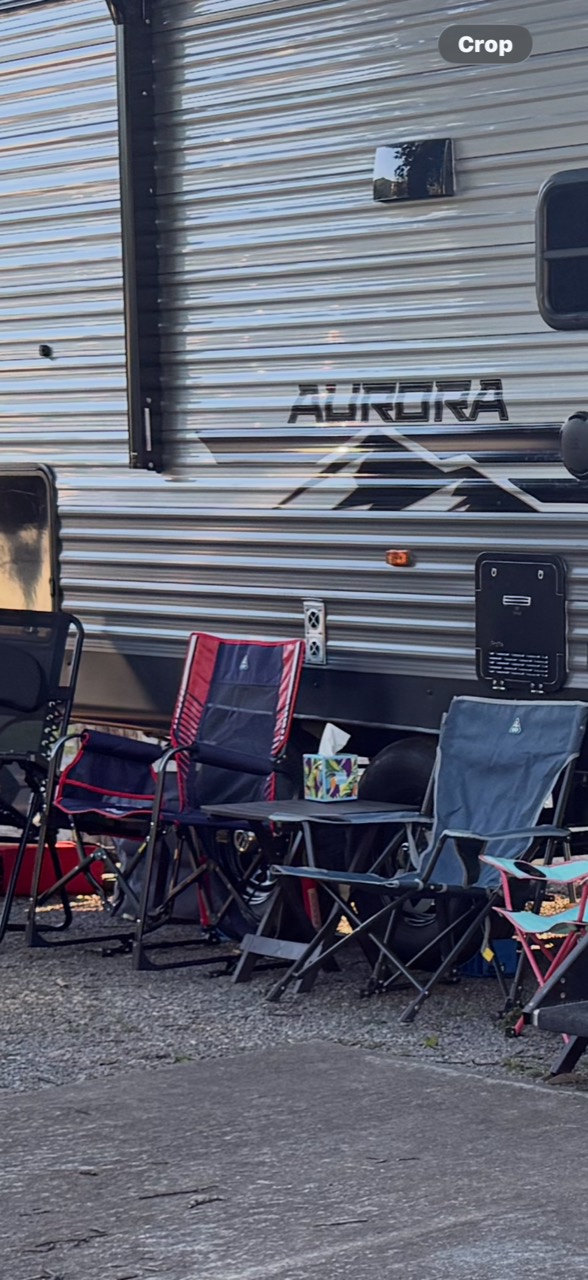
This guide is about the living space after the trailer is parked and its required setup is complete. It does not replace your RV instructions, leveling procedure, hookup checks, or campground rules. Start with the backing and setup guide if you need that part →
Start with somewhere to sit and somewhere to walk
Before opening every storage compartment, decide where people will sit and how they will move between the camper door, seating, and the rest of the campsite. Keep that route clear rather than building the seating area first and squeezing a walkway around it.
Let the actual campsite set the limits. Stay within your assigned space, leave access to equipment, and follow campground and manufacturer requirements around cooking appliances and other heat sources. A neat-looking arrangement is not a substitute for proper clearance.
Give each item a small, specific job
The chairs: comfort
I prefer my higher, larger GCI seat; Sami likes her lower blue one. Lily keeps borrowing ours. The seats do not need to match to work well for the people sitting in them.
Our chair experience →The table: the light stuff
A drink, a plate of food, and a few small items are enough. Our folding table can wobble on uneven ground, so we set it firmly and keep it lightly loaded.
The side table tradeoff →Separate “using it now” from “storing it all weekend”
Our hamper is a good example. Clothes collect in it during the day. When it is full or we are finished for the day, we transfer them into a bag under the jackknife sofa and collapse the hamper. It does not need to remain an open obstacle just because it was useful earlier.
The same question helps with other loose items: does this need to stay out, or does it need a convenient place to return to? Pick one spot for the things you reach for repeatedly rather than spreading them over every available surface.
Leave a place for the dogs—not just the gear
Happy enjoys lounging outside or taking over the sofa. Dolly wants to stay near us, often tucked under a chair watching everyone pass. Their preferences are part of the space we use, not an afterthought once all the equipment is out.
Keep chairs and belongings from crowding the entrance, and notice where the dogs have settled before moving furniture. Follow the campground's pet rules; a convenient shaded corner does not automatically make an unattended pet arrangement appropriate.
Do a small reset instead of a complete reorganization
- Return the loose items that have finished their job.
- Put dirty clothes into your chosen laundry system.
- Clear the table and the route to the steps.
- Secure food, trash, and scented items according to the campground's rules.
- Put away optional equipment you no longer expect to use.
Our pop-up trash can makes collection convenient, but it is not wildlife-resistant storage. Read the full trash-can review and storage caution →
Published September 12, 2026. Family preferences and gear experiences come from Jason's own feedback; suggested planning steps are editorial guidance, not a report of a trip we did not take.