The couch and dinette are my favorite part of our Aurora 26BHS. They give the whole family—including the dogs—a comfortable spot. Organizing the camper should protect that living space, not fill it with more containers.

Our collapsible baskets, metal under-shelf baskets, under-sofa laundry routine, and outdoor chair storage are things we actually use. Other organizer styles below are options to evaluate—not products we are claiming to have tested.
The baskets we actually use—and their limits
Collapsible baskets from Dollar General
These work well for us, but they are a little flimsy and can break easily. We have to be careful handling them. The convenience is real; so is the need to treat them gently.
Metal under-shelf hanging baskets
We use these for chips, snacks, and other lightweight things such as socks or accessories. They help use the space below a shelf.
My biggest frustration is that organizers never seem quite big enough or strong enough for everything I want them to do. That is a reason to match the basket to a smaller job—not a reason to load it beyond its limits.
We have not confirmed exact models or load ratings, so these are our use notes, not model-specific buying recommendations. For under-shelf baskets, check shelf thickness, supports, and the space left below. A metal basket does not increase the shelf's capacity.
Start with one annoying spot
Choose the place that repeatedly gets in the way: clothes piled on a seat, pantry items hiding behind each other, or something you need every day buried beneath a cushion. Empty that one area and group its contents by use. Before choosing storage, remove duplicates and things you do not need for this trip.
Record the usable width, depth, and height, plus the size of the opening. Note hinges, lips, plumbing, wiring, vents, moving furniture, and access panels. Do not turn equipment or service space into storage just because it looks empty.
Closets: hanging shelves, cubes, or fewer hangers?
A hanging fabric organizer can divide a tall closet into smaller spaces for lightweight folded clothing. The tradeoff is that it takes hanging space and puts its load on the closet rod. Check the rod and organizer limits, and make sure the closet still closes.
Small packing cubes or removable soft bins are another option if the shelf space is already useful. Group them by person or clothing type. You should be able to take out the item you need without emptying the closet onto the bed.
Over-door pockets need a separate fit check: door thickness, hinges, handle clearance, and whether the door can close and latch normally. Do not assume a household organizer fits an RV door.
Under seats and chairs: storage without stealing the seat
Our actual laundry routine is simple: collect dirty clothes in a collapsible hamper, move them into a storage bag when it is full or the day is done, then store the bag under the jackknife sofa and collapse the hamper.
That does not mean every space under a couch, chair, or dinette is a cargo compartment. Check what is there and what needs to move or remain accessible. A shallow removable bin can be worth considering in a designated storage area; a container wedged against a mechanism is not.
Match access to frequency. Something needed several times a day is a poor candidate for a spot that requires moving a person, a dog, and three cushions every time.
Read our hamper and under-sofa storage routine →
Pantry shelves: see it without stacking it to the ceiling
Before adding a shelf riser, measure the tallest item that must fit below it and the remaining height above. Include the cabinet opening, not just the room behind it. A second level is only useful if both levels are accessible.
Small removable bins can group breakfast items or snacks, while dividers can help separate lightweight flat items. These options use some space themselves. Choose them because they solve a specific retrieval problem, not because every shelf needs a matching container.
A riser or non-slip liner is not a travel restraint. Check the shelf and organizer load limits, secure items for travel, and make sure the cabinet still shuts and latches.
A quick fit check
Before an organizer earns its space
- It fits through the opening and can be removed when loaded.
- The door, drawer, seat, or bed still operates normally.
- Vents, service access, and equipment remain clear.
- The loaded weight is within the applicable limits.
- Contents can be secured for travel.
- It solves a repeated problem without creating another one.
Outside storage is part of the same system
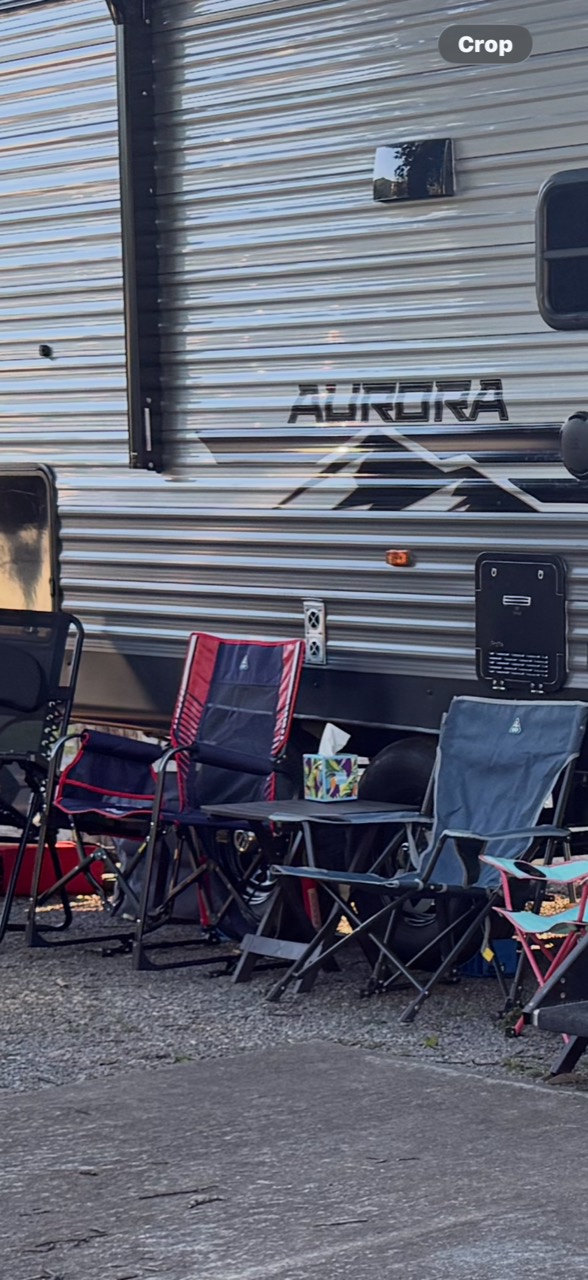
Our GCI chairs fit in the outdoor kitchen area beside the cooler and mini fridge. My chair folds flatter; Sami's blue chair pulls into a tube-like bundle that can lie on top of the beach chairs. That is how our particular items fit—not a guarantee for every chair or camper.
Before adding another tote, check whether it actually makes loading and unloading easier. Keep the things you use together accessible together, without blocking appliance ventilation or equipment access.
How our chairs fold and store →
Keep what makes the camper easier to live in
Try a small change on a trip before organizing every cabinet the same way. Notice what was easy to reach, what got left out, and what nobody used. The successful system is the one you can put back together without a major project—and that leaves the couch and dinette ready for everyone.
Published September 12, 2026. This is a fit-and-use planning guide. Specific organizer brands, capacities, and long-term reviews will be added only after we can support them with actual owner feedback.